
Shopping Cart

That cocoa is a food is undiscutable. Thousands of years ago American civilizations used it as fortifying and currency.
"The cocoa grain is one of the best-known sources of dietary polyphenols and contains more phenolic antioxidants than most foods".
This phrase belongs to the study "cocoa, science to the table" prepared by the Spanish Foundation of Nutrition and the Iberoamerica Foundation of Nutrition, gives us the keys to this food and its benefits for our body.
Of this study, which can read full Here, We extract as conclusions the following points that we extract as a summary:
- Cocoa and its derivatives are products with interesting nutritional values, its with-sum in adequate quantities and varieties is related to multiple health benefits in the context of a healthy and balanced dietary pattern.
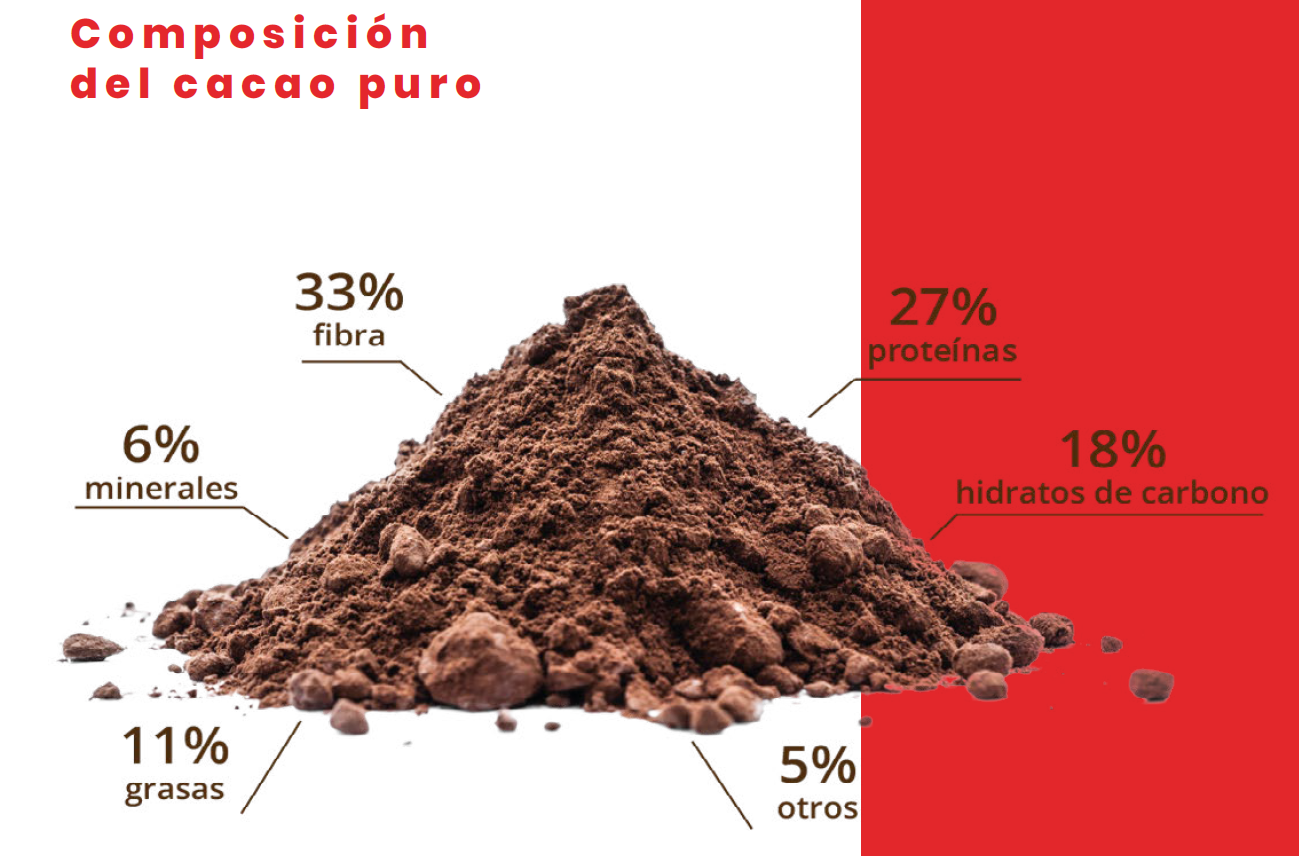
- Regarding its nutritional composition, cocoa and its derived products have a great content of polyphenols, bioactive compounds with antioxidant and anti-inflammatory function that provide important positive effects on health. It is estimated that a gram of cocoa brings 10 - 50 mg of polyphenols (mostly flavonoids), surpassing other foods rich in these bioactive compounds. In addition to its high flavonoid content, natural cocoa is also a good source of methylxanthines, soluble and insoluble dietary fiber, group B vitamins, amino acids and minerals.
- The recommendations focus on the consumption of natural cocoa, since the alkaline processes come to reduce up to 80% its flavonoid content. Within the products derived from cocoa, the intake of those who present a greater content of this is recommended.
- The consumption of cocoa and derived products, especially those that contain a high cocoa percentage, have been associated with better global and especially health, with the improvement of different cardiovascular diseases (ischemic heart disease, ACV, Acute myocardial infarction, heart failure and peripheral vascular disease), as well as with the decrease in risk factors for these pathologies, such as blood pressure, lipid profile, levels of insulin, homeostasis of blood glucose and improvement of platelet and vascular function.
- Also cocoa consumption and these products, have been related to a decrease in weight and BMI, as well as biomarkers of inflammation such as reactive C protein.
- In relation to mental and neurological diseases, the most current scientific evidence argues that cocoa intake and derivative products could reduce depression, anxiety and improve cognitive health in general due to an increase in blood flow o From the oxygenation of brain blood.
- Regarding bone health, it has been observed that cocoa consumption and its derivative products can improve and preserve bone health.
- The first investigations on polyphenols of cocoa and intestinal microbiota seem to indicate positive results due to its prebiotic effect and a beneficial change in the composition of the bacteria of the organism.
- According to the available data, cocoa, along with fruits and vegetables, are the main source of polyphenols in the Spanish children's diet. In addition, because of its palatability, natural cocoa seems to be a good promoter to increase the consumption of milk and, in turn, increase calcium intake in the child population.
That cocoa is a food is undiscutable. Thousands of years ago American civilizations used it as fortifying and currency.
"The cocoa grain is one of the best-known sources of dietary polyphenols and contains more phenolic antioxidants than most foods".
This phrase belongs to the study "cocoa, science to the table" prepared by the Spanish Foundation of Nutrition and the Iberoamerica Foundation of Nutrition, gives us the keys to this food and its benefits for our body.
Of this study, which can read full Here, We extract as conclusions the following points that we extract as a summary:
- Cocoa and its derivatives are products with interesting nutritional values, its with-sum in adequate quantities and varieties is related to multiple health benefits in the context of a healthy and balanced dietary pattern.
- Regarding its nutritional composition, cocoa and its derived products have a great content of polyphenols, bioactive compounds with antioxidant and anti-inflammatory function that provide important positive effects on health. It is estimated that a gram of cocoa brings 10 - 50 mg of polyphenols (mostly flavonoids), surpassing other foods rich in these bioactive compounds. In addition to its high flavonoid content, natural cocoa is also a good source of methylxanthines, soluble and insoluble dietary fiber, group B vitamins, amino acids and minerals.
- The recommendations focus on the consumption of natural cocoa, since the alkaline processes come to reduce up to 80% its flavonoid content. Within the products derived from cocoa, the intake of those who present a greater content of this is recommended.
- The consumption of cocoa and derived products, especially those that contain a high cocoa percentage, have been associated with better global and especially health, with the improvement of different cardiovascular diseases (ischemic heart disease, ACV, Acute myocardial infarction, heart failure and peripheral vascular disease), as well as with the decrease in risk factors for these pathologies, such as blood pressure, lipid profile, levels of insulin, homeostasis of blood glucose and improvement of platelet and vascular function.
- Also cocoa consumption and these products, have been related to a decrease in weight and BMI, as well as biomarkers of inflammation such as reactive C protein.
- In relation to mental and neurological diseases, the most current scientific evidence argues that cocoa intake and derivative products could reduce depression, anxiety and improve cognitive health in general due to an increase in blood flow o From the oxygenation of brain blood.
- Regarding bone health, it has been observed that cocoa consumption and its derivative products can improve and preserve bone health.
- The first investigations on polyphenols of cocoa and intestinal microbiota seem to indicate positive results due to its prebiotic effect and a beneficial change in the composition of the bacteria of the organism.
- According to the available data, cocoa, along with fruits and vegetables, are the main source of polyphenols in the Spanish children's diet. In addition, because of its palatability, natural cocoa seems to be a good promoter to increase the consumption of milk and, in turn, increase calcium intake in the child population.