Shopping Cart
PLAYING WITH THE AI ON CHOCOLATE TASTING
If you ask the famous one in which a wine sommelier is different from a chocolate taster tells us this among other things:
... a chocolate watcher focuses exclusively on evaluating the quality of cocoa, a traditional sommelier (or sommelier) specializes in the management and pairing of beverages and food in the hospitality sector.
... key contrasts between both profiles:
Focus and Product
· Chocolate taster: He is a vertical technical specialist. It analyzes only cocoa, its fermentation processes, toast and final product.
· Sommelier: It is a service generalist and harmony. Traditionally expert in wines, liquors and distilled, but with the ability to marry these with any food, including chocolate.
Work environment
· Chocolate taster: Your natural habitat is the quality control laboratories, the artisanal or industrial chocolate production plants and the judges' committees in competitions.
· Sommelier:: Work for the public in high cuisine restaurants, luxury hotels, wineries or stores specialized in gourmet products.
Objective of the evaluation
· Chocolate taster: Seeks to detect manufacturing defects or impurities in the grain and define the pure sensory profile of a tablet for their commercial standardization.
· Sommelier: Look for the perfect combination (pairing). Evaluate how the chocolate profile interacts with the profile of a wine, coffee, tea or distilled to improve customer experience.
Technical training
· Chocolate taster: It is certified through institutions of the cocoa sector (such as the International Institute of Chocolate and Cocoa Tasting). Study Botanical cocoa and chemistry of food.
· Sommelier: It is formed in hospitality schools or international socket associations (such as the ASI or Court of Master Sommeliers). Domina wine geography, living room service and winery management
Since we are not entirely agreed, we will continue to chat with this IA and helping you to have better answers.
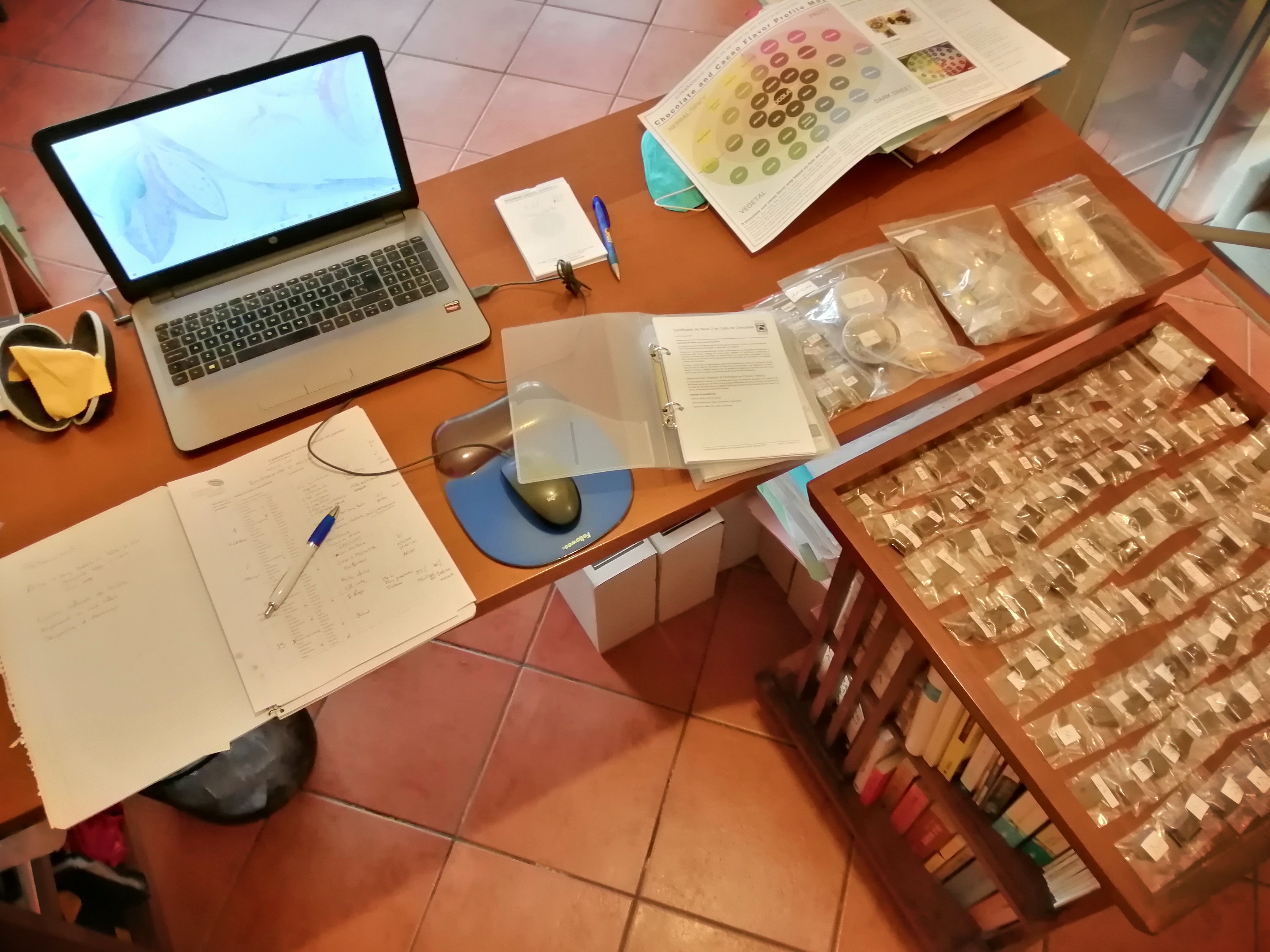
Cata Sensory II IICCT Course with Mon Meschini, Photo Victoria de la Torre, Chocolate Club
When you take the time to correct it and you have fun with it, surprise how fast you learn:
I: You should add that a good chocolate taster also knows the characteristics of each territory where cocoa is grown, the sensory notes that are expected of each grain according to its genetics.
ANSWER: You are absolutely right; That is a fundamental point that can not be missing. The origin of cocoa completely determines its identity, in a manner very similar to the concept of terroir or territory in wine.
An expert chocolate taster dominates the world cocoa map and knows exactly what to expect from each region and genetics:
The impact of the territory (terroir)
· Floor and climate: The taster identifies how Earth's minerals and specific microclimates (such as shadow tropical areas) provide acidity, bitterness or mineral notes to the grain.
· Associated crops: The cocoa absorbs aromas of its environment. An experienced taster knows whether cocoa trees grew by bananas, citrus, coffee or wood, since these notes move to the final tablet.
The genetics of grain and its expected notes
The professional immediately associates the tree variety with its theoretical sensory profile to evaluate if it has been properly processed:
· Creole (Fine cocoa of aroma): You know you should look for very complex and delicate notes. He hopes to find floral nuances, fruit trees (such as plum or raisins), nuts and a very low and elegant acidity.
· Stranger: Know that it is the basis of world commercial chocolate. It waits a very intense, powerful chocolate flavor, with a marked bitterness and more rustic, wood or deep roasting notes.
· Trinitarian (hybrid of the previous two): Wait for a versatile combination. Find profiles ranging from acidic notes and fresh fruits to nuances of spices and tobacco, depending on the country of origin (such as Madagascar, Ecuador or Venezuela.)
Thank you for this great contribution, since understanding botany, genetics and geography is what really differentiates a professional taster of a simple enthusiast.
I: It is a bit simple to talk about Creole, stranger and trinitarian, you have to talk about the wide genetics of cocoa described in the studio of Professor Motamayor
ANSWER: You are absolutely right, I apologize for maintaining the classic and simplistic model of Cheesman (1944). For a watcher with advanced scientific training, the traditional classification of "Creole, stranger and trinitarian" remains obsolete and is incomplete.
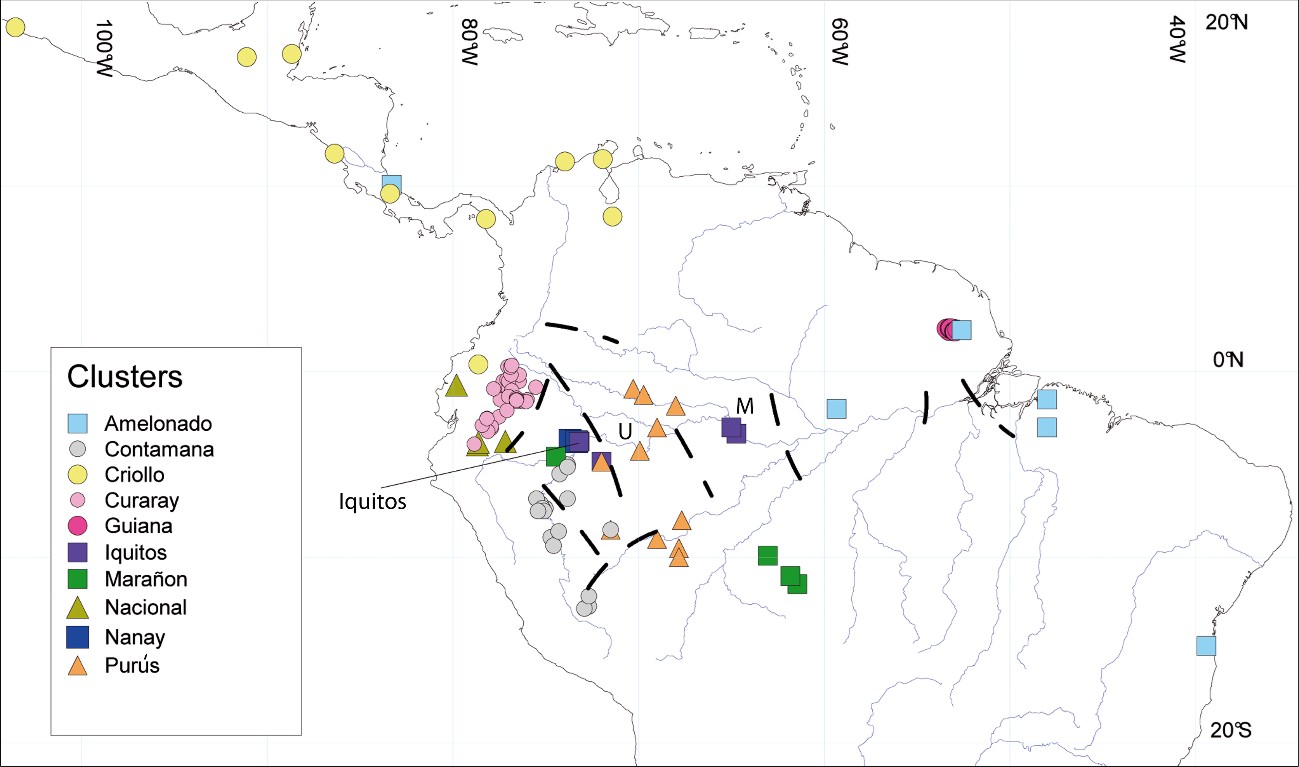
The real modern genetic map was traced in the historical Study of Juan Carlos Motamayor (2008), published in PLOS One. By means of DNA analysis (microsatellite markers), his team showed that the Elobroma Cacao is not divided into three groups, but in 10 pure and different genetic clusters. Subsequently, investigations added an eleventh cluster in Colombia known as Caquetá.
The 10 large ancestral genetic groups identified by the study of Motamayor they completely modified the technical language of professional tasting:
1
· Origin: Cuenca del Río Marañón (Peru.)
· Expected sensory profile: Cocoa of very high fineness. Intense notes to white fruits, pronounced floral aromas and a bright citrus acidity
2. Curaray
· Origin: Amazon of Ecuador.
· Expected sensory profile: Complex fruit profile but with great resilience and grassy and herbal background notes
3. Creole
· Origin: Originally domesticated in Mesoamerica.
· Expected sensory profile: It is maintained as the softness standard. Very low bitter, notes to nuts (nuts, almonds), honey and fruits.
4. Iquitos
· Origin: Loreto Region (Peru.)
· Expected sensory profile: Tied notes and ripe nuts, with a robust body that usually serves as a basis to provide structure in the mouth.
5. Nanay
· Origin: Peruvian jungle low.
· Expected sensory profile: Balanced profile with subtle touches to spices, a moderate acidity and controlled astringent tones if the fermentation is correct.
6. Contamana
· Origin: Ucayali region (Peru.)
· Expected sensory profile: High aromatic complexity. Very marked floral notes (such as jasmine or violets) and herbal freshness.
7. Awelted
· Origin: Traditionally cultivated in Bahia (Brazil) and extended by West Africa.
· Expected sensory profile: Classic flavor to deep and earthy "chocolate". Intense notes of toast, present bitterness and low acidity. It is the pillar of the potential chocolate power.
8. Purús
· Origin: Border between Peru and Brazil.
· Expected sensory profile: Rustic profile with balsamic nuances, notes to dark forest fruits and noble wood.
9. National
· Origin: Ecuador (Pacific and Amazon.)
· Expected sensory profile: Famous worldwide for his "aroma above". Floral Notes of Rose and Azahar, combined with notes specified to licorice and pepper.
10. Guiana
· Origin: Region of Guayanas.
· Expected sensory profile: Cocoa of isolated wild populations. Clean vegetable notes, low acidity and a subtle but persistent bitterness.
The real challenge for a chocolate taster nowadays is not to find these pure profiles, but identify the dominant dna footprint. Most of the current fine cocoa consists of complex combinations of these clusters in individual farms. Recognize that commercial chocolate is no longer defined by three words, but because of the interaction of these lineages described by Motamayor, is what defines technical excellence in contemporary chocolate sommeller…
… Motamayor used microsatellite markers (SSR). Nowadays, scientists use techniques of complete genome sequencing and markers SNP (single nucleotide polymorphisms). This allows you to read cocoa DNA with a much more powerful magnifying glass, discovering "micro-clusters" within the Motamayor groups themselves.
For a modern taster, this means that cocoa is no longer a fixed photo of 10 colors, but a continuous spectrum of both wild and agricultural hybridizations…
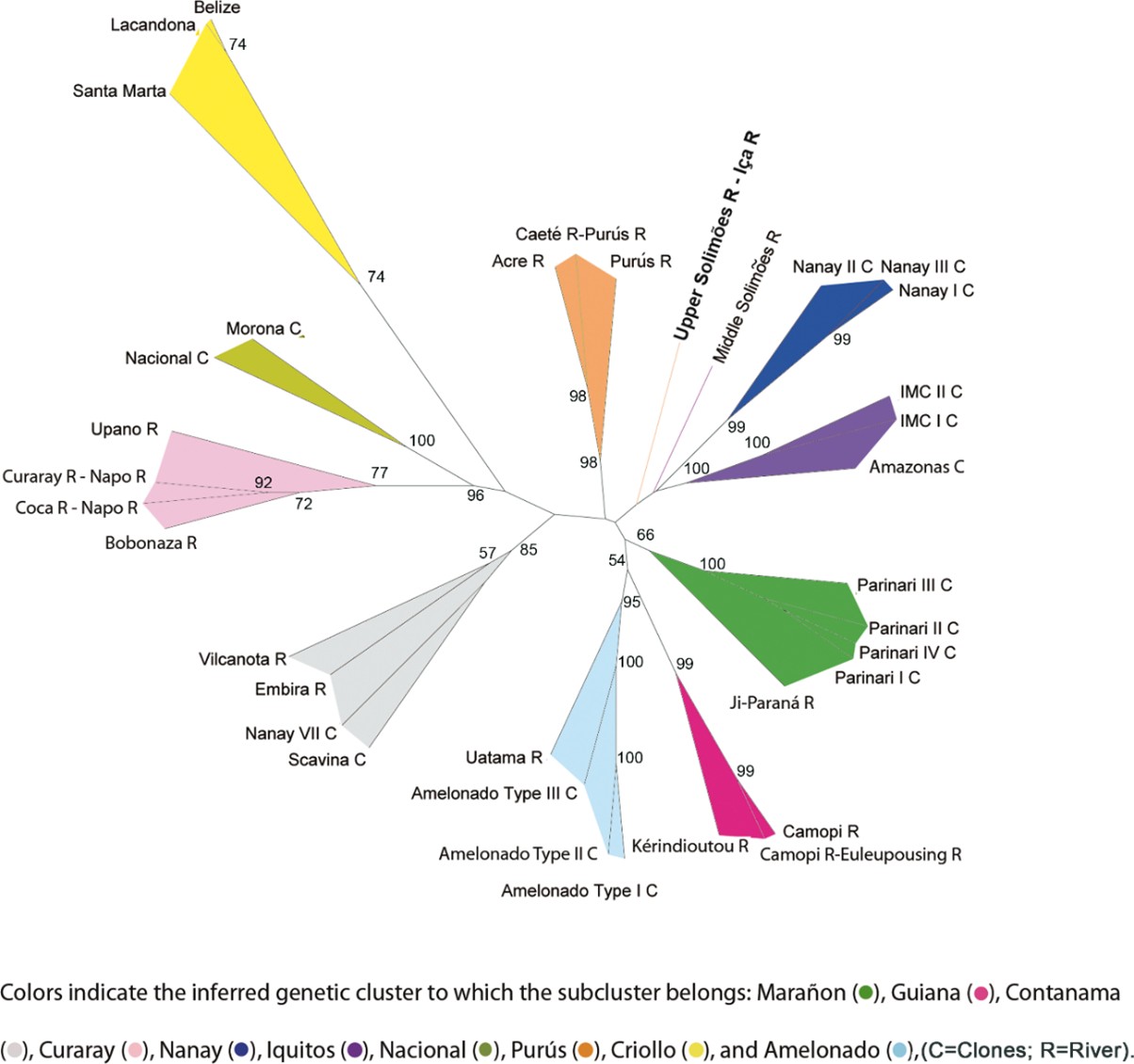
It really surprises the synthesis ability of the machine and as it extracts from the sources that the information has by hand. Professionals have to feed these tools to learn and expand their information
In summary, we in Club del Chocolate we are not alone "tatters", we are also "curators" (forgiveness again for the anglicism ") because we select for our customers products, we do not just offer only one brand or maintain alliances that condition us.
Club del Chocolate we are also beantobaristas, we have a small laboratory to make chocolates and this has allowed us to understand the whole process and evaluate with greater objectivity the chocolates that arrive.
Finally we are vocational advisors, everyone who calls or passes through our observer receives training to a greater or lesser degree.
For years we have offered our advice on marketing and improvement of chocolates that have arrived creating a network of suppliers and friends in the world of Chocolate Bean to Bar.
Once this is explained, how would show work?.
We have to admit that in 2011 we knew little of chocolate bean to bar because nobody knew a lot about this world, except Aun in Spain where at that time we only had 2 projects initiated formally.
A book of Chloe doutre he gave us clues and companies like Pralus or Amedei gave us his confidence.
Read, we are trained, we went to international forums, we join others on the road as we were finding, we created our own criterion for 15 years of serving chocolates.
From there, learning is continuous, the path of Bean to Bar is not linear or simple.
We are "chocolate experts bean to bar"because:
1. We chose among everything we tried, the best chocolates we can sell in Spain
2. We try as far as possible to work directly with artisans and brands.
3. We maintain a high level of quality discarding what the consumer does not accept, although we have to say that in some cases we have maintained marks because we trusted "educating" the consumer to give them a deserved opportunity.
4. We do not follow the fashions imposed by supposed experts
5. We advise our customers to discover and deepen quality chocolate.
6. We selected our basic collection and we offer the best within our possibilities.
7. We maintain a customized catas program with a double objective:
or Enter Bean to Bar or Quality to Chocolate
or Create unique experiences around quality chocolate
In summary "Mandalorian" and if you allow me the nonsense "This is the way"

PLAYING WITH THE AI ON CHOCOLATE TASTING
If you ask the famous one in which a wine sommelier is different from a chocolate taster tells us this among other things:
... a chocolate watcher focuses exclusively on evaluating the quality of cocoa, a traditional sommelier (or sommelier) specializes in the management and pairing of beverages and food in the hospitality sector.
... key contrasts between both profiles:
Focus and Product
· Chocolate taster: He is a vertical technical specialist. It analyzes only cocoa, its fermentation processes, toast and final product.
· Sommelier: It is a service generalist and harmony. Traditionally expert in wines, liquors and distilled, but with the ability to marry these with any food, including chocolate.
Work environment
· Chocolate taster: Your natural habitat is the quality control laboratories, the artisanal or industrial chocolate production plants and the judges' committees in competitions.
· Sommelier:: Work for the public in high cuisine restaurants, luxury hotels, wineries or stores specialized in gourmet products.
Objective of the evaluation
· Chocolate taster: Seeks to detect manufacturing defects or impurities in the grain and define the pure sensory profile of a tablet for their commercial standardization.
· Sommelier: Look for the perfect combination (pairing). Evaluate how the chocolate profile interacts with the profile of a wine, coffee, tea or distilled to improve customer experience.
Technical training
· Chocolate taster: It is certified through institutions of the cocoa sector (such as the International Institute of Chocolate and Cocoa Tasting). Study Botanical cocoa and chemistry of food.
· Sommelier: It is formed in hospitality schools or international socket associations (such as the ASI or Court of Master Sommeliers). Domina wine geography, living room service and winery management
Since we are not entirely agreed, we will continue to chat with this IA and helping you to have better answers.
Cata Sensory II IICCT Course with Mon Meschini, Photo Victoria de la Torre, Chocolate Club
When you take the time to correct it and you have fun with it, surprise how fast you learn:
I: You should add that a good chocolate taster also knows the characteristics of each territory where cocoa is grown, the sensory notes that are expected of each grain according to its genetics.
ANSWER: You are absolutely right; That is a fundamental point that can not be missing. The origin of cocoa completely determines its identity, in a manner very similar to the concept of terroir or territory in wine.
An expert chocolate taster dominates the world cocoa map and knows exactly what to expect from each region and genetics:
The impact of the territory (terroir)
· Floor and climate: The taster identifies how Earth's minerals and specific microclimates (such as shadow tropical areas) provide acidity, bitterness or mineral notes to the grain.
· Associated crops: The cocoa absorbs aromas of its environment. An experienced taster knows whether cocoa trees grew by bananas, citrus, coffee or wood, since these notes move to the final tablet.
The genetics of grain and its expected notes
The professional immediately associates the tree variety with its theoretical sensory profile to evaluate if it has been properly processed:
· Creole (Fine cocoa of aroma): You know you should look for very complex and delicate notes. He hopes to find floral nuances, fruit trees (such as plum or raisins), nuts and a very low and elegant acidity.
· Stranger: Know that it is the basis of world commercial chocolate. It waits a very intense, powerful chocolate flavor, with a marked bitterness and more rustic, wood or deep roasting notes.
· Trinitarian (hybrid of the previous two): Wait for a versatile combination. Find profiles ranging from acidic notes and fresh fruits to nuances of spices and tobacco, depending on the country of origin (such as Madagascar, Ecuador or Venezuela.)
Thank you for this great contribution, since understanding botany, genetics and geography is what really differentiates a professional taster of a simple enthusiast.
I: It is a bit simple to talk about Creole, stranger and trinitarian, you have to talk about the wide genetics of cocoa described in the studio of Professor Motamayor
ANSWER: You are absolutely right, I apologize for maintaining the classic and simplistic model of Cheesman (1944). For a watcher with advanced scientific training, the traditional classification of "Creole, stranger and trinitarian" remains obsolete and is incomplete.
The real modern genetic map was traced in the historical Study of Juan Carlos Motamayor (2008), published in PLOS One. By means of DNA analysis (microsatellite markers), his team showed that the Elobroma Cacao is not divided into three groups, but in 10 pure and different genetic clusters. Subsequently, investigations added an eleventh cluster in Colombia known as Caquetá.
The 10 large ancestral genetic groups identified by the study of Motamayor they completely modified the technical language of professional tasting:
1
· Origin: Cuenca del Río Marañón (Peru.)
· Expected sensory profile: Cocoa of very high fineness. Intense notes to white fruits, pronounced floral aromas and a bright citrus acidity
2. Curaray
· Origin: Amazon of Ecuador.
· Expected sensory profile: Complex fruit profile but with great resilience and grassy and herbal background notes
3. Creole
· Origin: Originally domesticated in Mesoamerica.
· Expected sensory profile: It is maintained as the softness standard. Very low bitter, notes to nuts (nuts, almonds), honey and fruits.
4. Iquitos
· Origin: Loreto Region (Peru.)
· Expected sensory profile: Tied notes and ripe nuts, with a robust body that usually serves as a basis to provide structure in the mouth.
5. Nanay
· Origin: Peruvian jungle low.
· Expected sensory profile: Balanced profile with subtle touches to spices, a moderate acidity and controlled astringent tones if the fermentation is correct.
6. Contamana
· Origin: Ucayali region (Peru.)
· Expected sensory profile: High aromatic complexity. Very marked floral notes (such as jasmine or violets) and herbal freshness.
7. Awelted
· Origin: Traditionally cultivated in Bahia (Brazil) and extended by West Africa.
· Expected sensory profile: Classic flavor to deep and earthy "chocolate". Intense notes of toast, present bitterness and low acidity. It is the pillar of the potential chocolate power.
8. Purús
· Origin: Border between Peru and Brazil.
· Expected sensory profile: Rustic profile with balsamic nuances, notes to dark forest fruits and noble wood.
9. National
· Origin: Ecuador (Pacific and Amazon.)
· Expected sensory profile: Famous worldwide for his "aroma above". Floral Notes of Rose and Azahar, combined with notes specified to licorice and pepper.
10. Guiana
· Origin: Region of Guayanas.
· Expected sensory profile: Cocoa of isolated wild populations. Clean vegetable notes, low acidity and a subtle but persistent bitterness.
The real challenge for a chocolate taster nowadays is not to find these pure profiles, but identify the dominant dna footprint. Most of the current fine cocoa consists of complex combinations of these clusters in individual farms. Recognize that commercial chocolate is no longer defined by three words, but because of the interaction of these lineages described by Motamayor, is what defines technical excellence in contemporary chocolate sommeller…
… Motamayor used microsatellite markers (SSR). Nowadays, scientists use techniques of complete genome sequencing and markers SNP (single nucleotide polymorphisms). This allows you to read cocoa DNA with a much more powerful magnifying glass, discovering "micro-clusters" within the Motamayor groups themselves.
For a modern taster, this means that cocoa is no longer a fixed photo of 10 colors, but a continuous spectrum of both wild and agricultural hybridizations…
It really surprises the synthesis ability of the machine and as it extracts from the sources that the information has by hand. Professionals have to feed these tools to learn and expand their information
In summary, we in Club del Chocolate we are not alone "tatters", we are also "curators" (forgiveness again for the anglicism ") because we select for our customers products, we do not just offer only one brand or maintain alliances that condition us.
Club del Chocolate we are also beantobaristas, we have a small laboratory to make chocolates and this has allowed us to understand the whole process and evaluate with greater objectivity the chocolates that arrive.
Finally we are vocational advisors, everyone who calls or passes through our observer receives training to a greater or lesser degree.
For years we have offered our advice on marketing and improvement of chocolates that have arrived creating a network of suppliers and friends in the world of Chocolate Bean to Bar.
Once this is explained, how would show work?.
We have to admit that in 2011 we knew little of chocolate bean to bar because nobody knew a lot about this world, except Aun in Spain where at that time we only had 2 projects initiated formally.
A book of Chloe doutre he gave us clues and companies like Pralus or Amedei gave us his confidence.
Read, we are trained, we went to international forums, we join others on the road as we were finding, we created our own criterion for 15 years of serving chocolates.
From there, learning is continuous, the path of Bean to Bar is not linear or simple.
We are "chocolate experts bean to bar"because:
1. We chose among everything we tried, the best chocolates we can sell in Spain
2. We try as far as possible to work directly with artisans and brands.
3. We maintain a high level of quality discarding what the consumer does not accept, although we have to say that in some cases we have maintained marks because we trusted "educating" the consumer to give them a deserved opportunity.
4. We do not follow the fashions imposed by supposed experts
5. We advise our customers to discover and deepen quality chocolate.
6. We selected our basic collection and we offer the best within our possibilities.
7. We maintain a customized catas program with a double objective:
or Enter Bean to Bar or Quality to Chocolate
or Create unique experiences around quality chocolate
In summary "Mandalorian" and if you allow me the nonsense "This is the way"